OUR STORY
System Failure: A Story of Loss, Love & Hope
When every system fails, love builds its own.
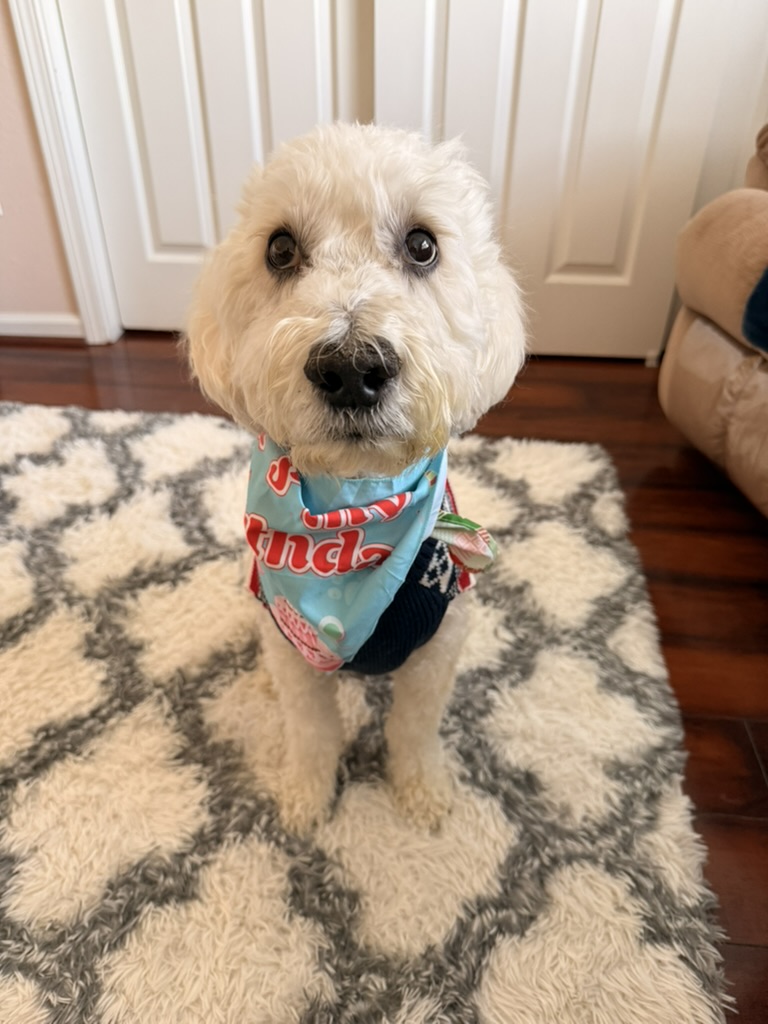
Loki on his 6th birthday — January 7, 2026
On January 17, 2026, at 11:29 AM, I lost my beloved Goldendoodle, Loki. He was a medium doodle, 67 lbs at his prime, 27 lbs when he passed. He was the happiest of dogs, extremely smart, and gave us moments that we will cherish forever.
Whether it is the image of him chasing bubbles in our spa, resource guarding his toys like they were his kids, or “talking” to us to entice us into giving him his favorite treat. In the 6 short years that he lived, we amassed countless moments like these that will come to haunt us when we least expect it.
This is an article about systems. It is an article about failure. It is also an article about hope. Because yes, hope and failure can co-exist.
Category Two
I believe there are two categories of people who should never have pets. Category one: People who cannot be bothered about them and will abuse them. Category two: People who will pour their endless love into their pets before they even know what is happening and cannot really let go when they suddenly leave you.
I realized a while ago that I am in category two. But I also realize now that category two is perhaps how life should be? Life is but suffering anyway. What is the point if one doesn't love endlessly and care endlessly?
I would imagine that a lot of pet parents are category two. And I firmly believe that every pet deserves a category two parent. Because my Loki, he loved unconditionally. Not like us humans.
And that unconditional love is why I fought so hard when the systems started failing him.
“Every pet deserves a category two parent. Because my Loki, he loved unconditionally. Not like us humans.”
The Diagnosis That Never Came
In early October of 2024, Loki and his brother Logan were playing and I noticed that Loki's underbelly was very yellow. Concerned that he had jaundice, I took him to the local vet. They did a liver panel, noticed elevated levels of bilirubin and other liver related measures and the nightmare started.
We were referred to UC Davis — the second best teaching vet school in the world. Meeting their wonderful doctors. The thought that Loki was going to have the best care in the world. Because he was. He did.
And yet. The diagnosis never came. What came instead was a process of elimination. It could be this. It might be that. Let's rule out X. Let's try Y.
Ultrasounds. Bloodwork. Liver biopsy. Surgery. A stent placed. Loki sent home. A week later, back in the hospital. The stent removed. A bacterial infection found. Antibiotics. Steroids for inflammation. And then — diabetes. Caused by the steroids. Because that's when we realized that Loki could have been pre-diabetic. His system did not tell us that.
After spending close to $30K, we did not have a diagnosis. A prognosis we could trust. A coordinated care plan. A system that talked to itself.
By the time Loki was sent home, two things happened: He had spent a month in the hospital and came back traumatized. He also came back with a feeding tube in his neck that lasted for more than 4 months.
The doctors told me that Loki probably had another 2 to 3 months to live.
Building My Own System
When the veterinary system failed to give me a coordinated care plan, I built one. With Claude.
I created a Project in Anthropic's Claude. I uploaded everything — Loki's bloodwork, his medication list, his symptoms, his diet. I documented every change, every observation, every question. And Claude became something I didn't have anywhere else: a thinking partner who could see the whole system.
The Projects feature let me do something the veterinary system couldn't: maintain context. Every conversation built on the last. Claude remembered Loki's history, his medications, his patterns. When I noticed something — excessive thirst, a change in stool color, lethargy — I didn't start from zero. I had a partner who knew the full picture.
This is what $30K in the veterinary system didn't buy me. But a $20/month subscription did.
I created a comprehensive care plan. I incorporated everything from herbal routines to specific diets. We monitored everything. Claude even told me things that the vet hadn't — for example, that one of the medications he was prescribed should not be crushed and fed into the feeding tube, as it was a slow release medication.
His feeding tube came out in March 2025.
They gave him 2 – 3 months.
Loki lived 14 more. Not just survived. Lived. Bubbles in the spa. Tail wags. Moments that made me forget he was sick.
“They gave him 2 – 3 months. Loki lived 14 more. Not just survived. Lived.”
The Final System Failed
And then the final system failed. The one I had no control over at all. Loki's body.
Nutrients went in, but they weren't being absorbed. His pancreas wasn't producing enzymes. By the time we discovered the mal-digestion — by the time we got the enzymes, the iron, the right interventions — his body had depleted too far. His bone marrow had stopped producing red blood cells. His organs were failing.
Last week, we went to the vet again. A desperate attempt. We were referred to Sage in Dublin for a transfusion. We drove an hour and a half with a very sick Loki.
At Sage, I was given a very different prognosis. Multiple systems failure. The doctor asked me, “Did nobody tell you this?”. Only two options: try another diagnosis, or end his suffering. Diagnosis was out of the question. What UC Davis couldn't find in a month — what could these folks do differently?
I took him home that evening. At home, Loki told me that it was time to go. By the next morning, he was in a vegetative state. And at the local vet, I told him: “I am sorry. Forgive me. Thank you. I love you.”
He did not make a single sound throughout his suffering. No yelps of pain. No winces, just nothing. Even in his last moments, he just stopped breathing.
Why I'm Telling You This
Because Loki deserved better. And so does every pet. And so does every Category Two parent who will walk this path after me.
The systems failed Loki. The diagnostic system that couldn't find answers. The veterinary system that couldn't coordinate care. The home care system that had no playbook. The monitoring system that couldn't see inside his body until it was too late.
But systems can be redesigned.
What if there was a way to see the flows before the stock depletes? What if a collar could track heart rate, respiration, temperature — and an AI could learn your dog's baseline and alert you when patterns shift? What if a simple photo of your dog's gums could detect anemia weeks before the crisis? What if stool analysis could catch maldigestion before the weight disappears?
What if Category Two parents had a system that worked with them, not against them?
This is what I want to build. Not to replace veterinarians — but to fill the void the system leaves behind. To give pet parents the tools to see what's invisible. To catch the failures before they cascade.
What would it take for no pet parent to feel this alone?
Loki was 6 years old.
67 lbs at his prime. 27 lbs at the end.
He gave me 14 months the system said I wouldn't have.
He taught me more about systems thinking than any textbook.
He loved unconditionally, suffered silently, and fought until his body couldn't anymore.
To my Loki: I am sorry. Forgive me. Thank you. I love you.
Long live the king. Loki, my brave.
Join Us
The care system Loki deserved is now available. LOKI is live on iOS, Android, and the web.
Try LOKI Now